The Concretely

History

Concrete on show

Exhibitions, symposia and prizes for sculpture in concrete, 1951 to 2026

Concrete rarely gets an exhibition to itself. When it does, there is usually a cement company close by.

These are the series, symposia and prizes, and one museum, where concrete was the stated material.

1951–1973

A cement company in the park

In Tokyo, a cement company paid for a sculpture exhibition in the park. The same year, concrete figures went up on London's South Bank, and a few years later a Norwegian technique gave the material its most famous name.

1951–1970s

Hibiya Park, Tokyo · Japan · recurring series

Open-air sculpture in white cement

白色セメントによる春の野外創作彫刻展

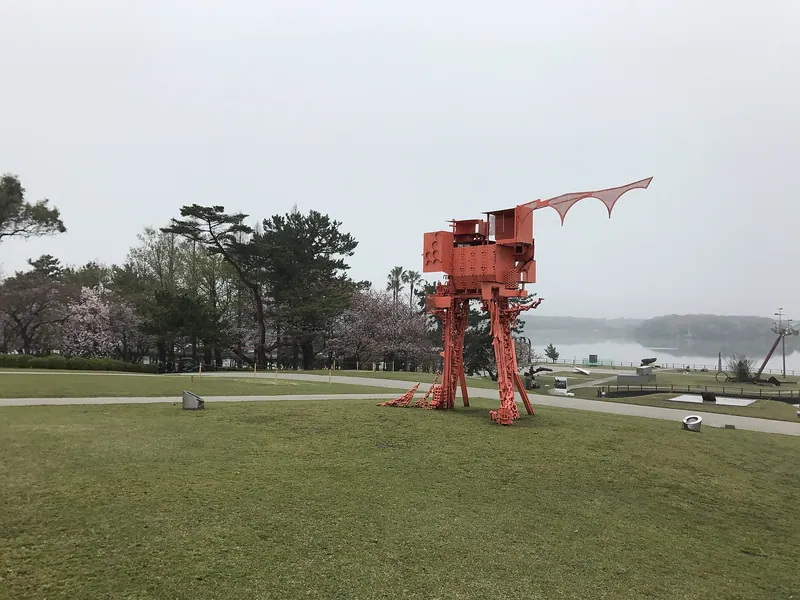
From the spring of 1951 the Tokyo Metropolitan Government held an open-air sculpture exhibition in Hibiya Park each year, paid for by Onoda Cement (opens in a new tab), the company now called Taiheiyo Cement. Onoda gave the artists white cement free of charge, a production fee, and transport and installation. It ran into the early 1970s.

A group of sculptors, critics and concrete engineers, the White Cement Plastic Arts Association, chose the artists and advised on technique. There were no prizes and no ranking. Ube, another cement town, held its first outdoor sculpture exhibition ten years later.
1951

South Bank, London · United Kingdom · context

Festival of Britain

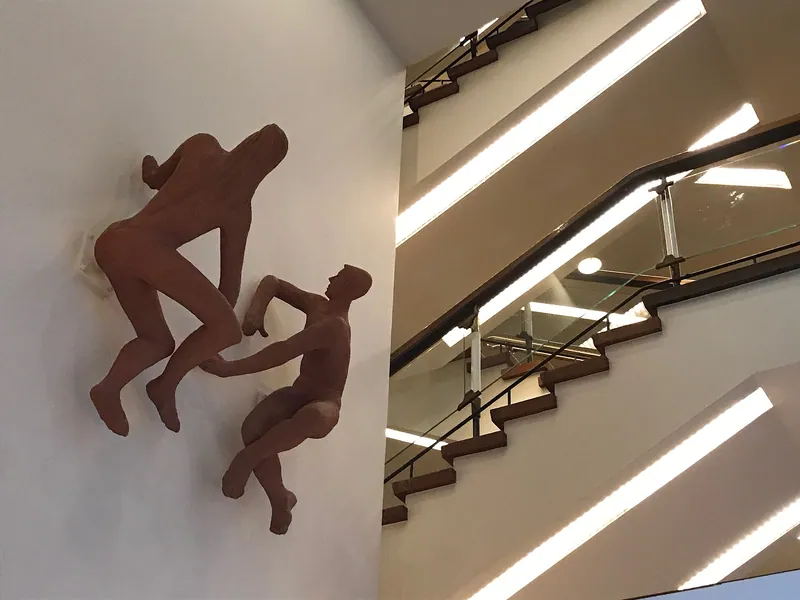
Several of the large figures commissioned for the South Bank exhibition were cast in concrete. Mitzi Cunliffe's Root Bodied Forth was pink-tinted concrete and is now lost. The South Bank cast of Daphne Hardy Henrion's Youth was concrete too, and so was Barbara Hepworth's Turning Forms, a Festival commission that has since been restored.

Two terracotta-coloured figures fixed to a white wall above a staircase
Peter Laszlo Peri, The Sunbathers, made in concrete for the 1951 Festival of Britain and now at the Southbank Centre. Photographed in 2018. Photo: Matt Brown from London, England, CC BY 2.0 (opens in a new tab), via Wikimedia Commons (opens in a new tab)

People Mitzi Cunliffe, Daphne Hardy Henrion, Barbara Hepworth, Peter Laszlo Peri

Sources Root Bodied Forth, Wikipedia (opens in a new tab) · Youth, London Museum (opens in a new tab) · Turning Forms, Barbara Hepworth estate (opens in a new tab) · Turning Forms restored, Twentieth Century Society (opens in a new tab)

1957–1973

Oslo, Kristinehamn, New York and elsewhere · Norway · context

Picasso and Carl Nesjar

In January 1957 the Norwegian artist Carl Nesjar showed Picasso photographs of Betograve, a way of sandblasting a drawing into concrete developed by the architect Erling Viksjø and the engineer Sverre Jystad. The first sculpture was made that year.

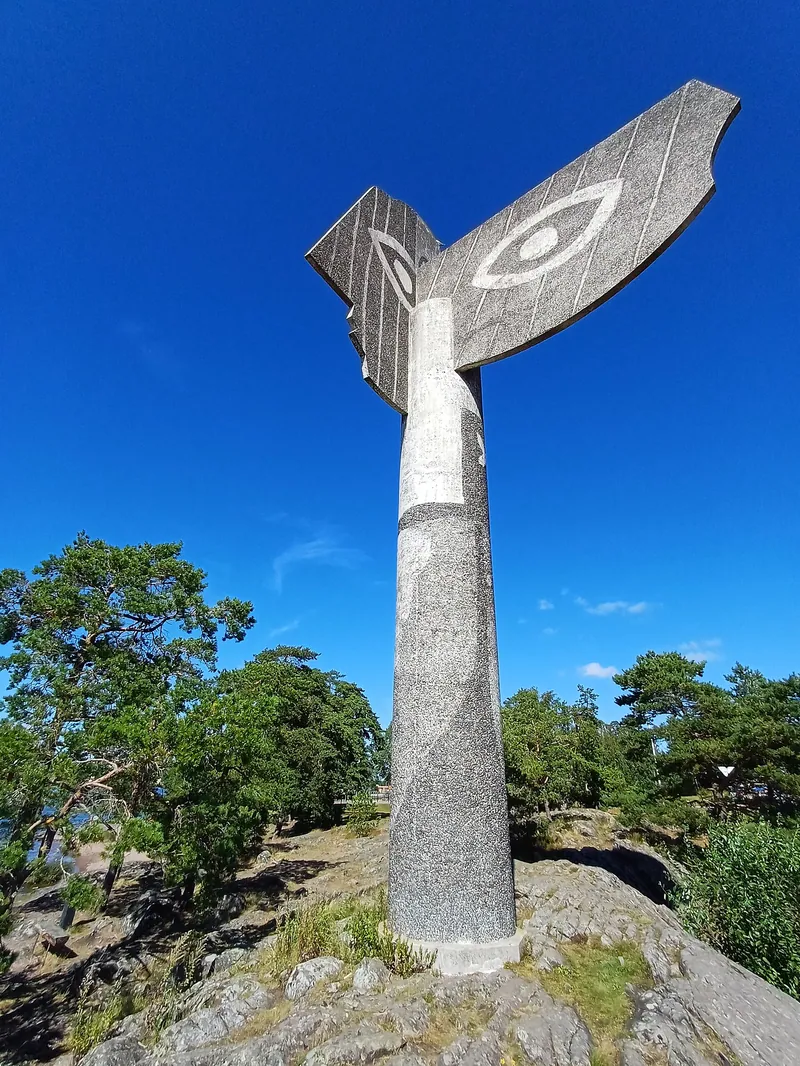
Until Picasso's death in 1973 the two made more than a dozen monumental concrete sculptures, in Norway, Sweden, France, Spain, Israel and the United States. The one at Kristinehamn was unveiled at midsummer 1965, the Bust of Sylvette in New York dedicated in 1968.

A tall grey concrete column with a wing-like head incised with an eye, on a rock among pines
Picasso and Carl Nesjar's sculpture at Kristinehamn, Sweden, unveiled in 1965. Photographed in 2024. Photo: L'imaginaire, CC0 (opens in a new tab), via Wikimedia Commons (opens in a new tab)

People Pablo Picasso, Carl Nesjar

Sources Nasher Sculpture Center essay (opens in a new tab) · Carl Nesjar, Wikipedia (opens in a new tab) · Bust of Sylvette, Wikipedia (opens in a new tab) · The Picasso sculpture, Kristinehamn (opens in a new tab)

1965–1971

The symposium years

Sculpture symposia spread in the 1960s: artists working side by side in public, with industry supplying the material. Concrete turned up at several of them, and some of the same names recur.

1965

Long Beach, California · United States · mixed materials

California International Sculpture Symposium

The first international sculpture symposium in the United States and the first on a college campus, held over the summer of 1965 at what is now California State University, Long Beach. Each artist was paired with an industrial sponsor.

It was not a concrete event: the works are in steel, copper, wood, aluminium and concrete. The concrete ones are J.J. Beljon's white Homage to Simon Rodia, Kosso Eloul's Hardfact in concrete and stainless steel, and André Bloc's tower, begun for the symposium and finished in 1972.

1967

Grenoble · France · mixed materials

First French Sculpture Symposium

Premier Symposium français de sculpture

Held by the City of Grenoble in the summer of 1967, ahead of the 1968 Winter Olympics. About fifteen works were made in Parc Paul-Mistral in mixed materials and placed in the Olympic Village and around the town.

Three are concrete. Ervin Patkaï's Mur-Fontaine is white reinforced concrete moulded in polystyrene and stacked in slabs. Maxime Descombin's Mutants is precast concrete with pink granite aggregate. Pierre Székely's Univers de Jeux 1, a play sculpture, is coloured concrete sprayed on metal mesh. Patkaï and Székely were both born in Hungary.

People Ervin Patkaï, Maxime Descombin, Pierre Székely, Morice Lipsi, Miloslav Chlupáč, Gigi Guadagnucci, Yasuo Mizui

Sources The symposium, Grenoble heritage (French) (opens in a new tab) · Patkaï, Mur-Fontaine (opens in a new tab) · Descombin, Mutants (opens in a new tab) · Székely, Univers de Jeux 1 (opens in a new tab)

1967–1986

Maribor · Slovenia · recurring series

Forma Viva Maribor

Mednarodni simpozij kiparjev Forma viva Maribor

Slovenia's Forma Viva symposia gave each site its own material: stone at Portorož, wood at Kostanjevica, steel at Ravne, concrete at Maribor. The construction company Stavbar started the Maribor branch and helped pay for it; Gradis and Konstruktor joined later.

The national culture portal counts six editions, nineteen artists and nineteen large works, placed at key points of the city, many of them in its new housing estates. The American sculptor Bradford Graves worked there in 1970, a year before he went to the concrete symposium in Vermont.

People Tone Lapajne, Lino Tiné, Takeshi Kudo, Bradford Graves, Vlasta Zorko Tihec, Slavko Tihec, Janez Boljka, Luciano Ceschia, Maciej Szańkowski, Lujo Vodopivec, Harunori Fujimoto, Mojca Smerdu, Will Nettleship, Robert Adzema, Dragica Čadež Lapajne

Sources Forma Viva open-air collection, Culture.si (opens in a new tab) · Kralj, economy and art at Forma Viva Maribor, 2026 (opens in a new tab) · Art in public space, Maribor Art Gallery (Slovene) (opens in a new tab)

1968

Mexico City · Mexico · one-off

Ruta de la Amistad

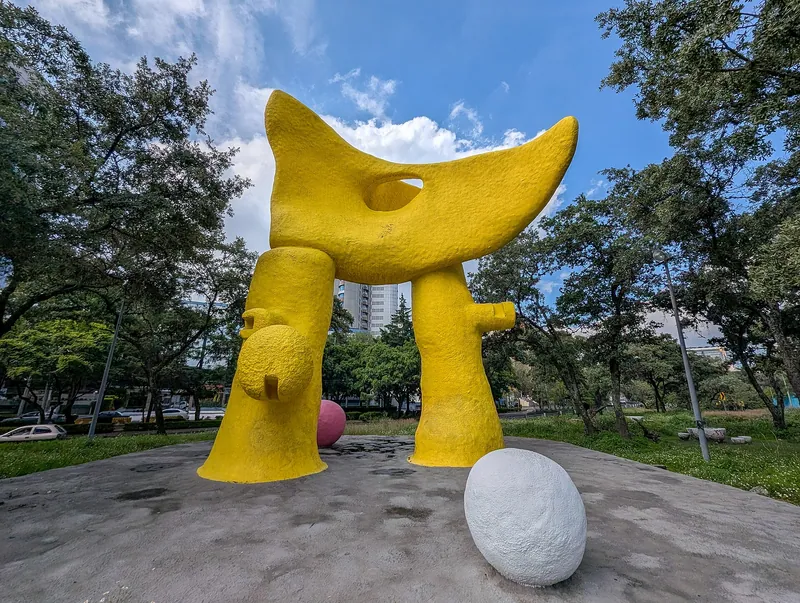
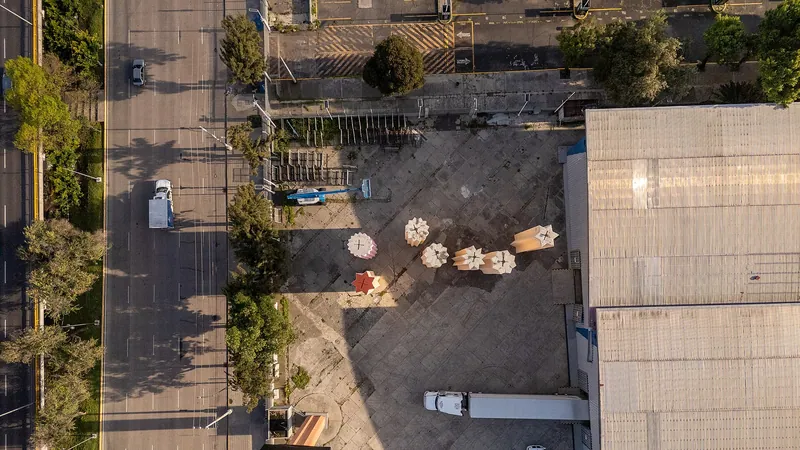
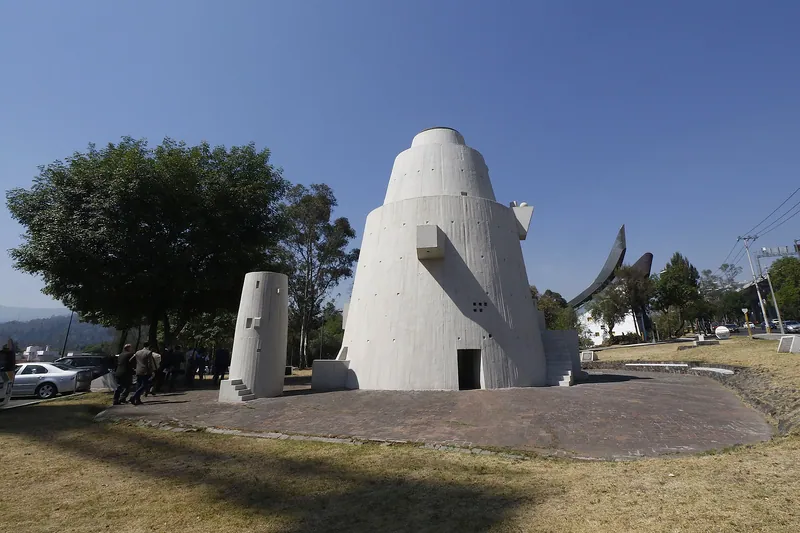
Nineteen monumental concrete sculptures along about 17 kilometres of Mexico City's ring road, made for the Cultural Olympiad of the 1968 Games by sculptors invited from around the world. Mathias Goeritz conceived and coordinated it with the architect Pedro Ramírez Vázquez. Three guest works at Olympic venues off the route, by Calder, Goeritz and Germán Cueto, are why some sources count 22.

Station 5, El Sol Bípedo, is by Pierre Székely, who had made a concrete work at Grenoble the summer before. After long neglect the route has been restored and partly moved by the Patronato Ruta de la Amistad, founded in 1994.

A yellow two-legged concrete form with a crescent top, beside a white sphere
Pierre Székely, El Sol Bípedo, station 5 of the Ruta de la Amistad, Mexico City, 1968. Photographed in 2026. Photo: ProtoplasmaKid, CC BY 4.0 (opens in a new tab), via Wikimedia Commons (opens in a new tab)
A group of concrete columns on a paved esplanade, seen from above
Mathias Goeritz, Osa Mayor, one of the three guest works, on the esplanade of the Palacio de los Deportes, Mexico City. Photographed in 2025. Photo: ProtoplasmaKid, CC BY-SA 4.0 (opens in a new tab), via Wikimedia Commons (opens in a new tab)

People Mathias Goeritz, Pierre Székely, Herbert Bayer, Miloslav Chlupáč, Alexander Calder (guest), Germán Cueto (guest)

Sources INAH on the reinforced-concrete sculptures (Spanish, PDF) (opens in a new tab) · Patronato Ruta de la Amistad, Google Arts & Culture (opens in a new tab) · El Sol Bípedo, Mexico City government (Spanish) (opens in a new tab)

1971

Williston, Vermont · United States · one-off

Vermont International Sculpture Symposium

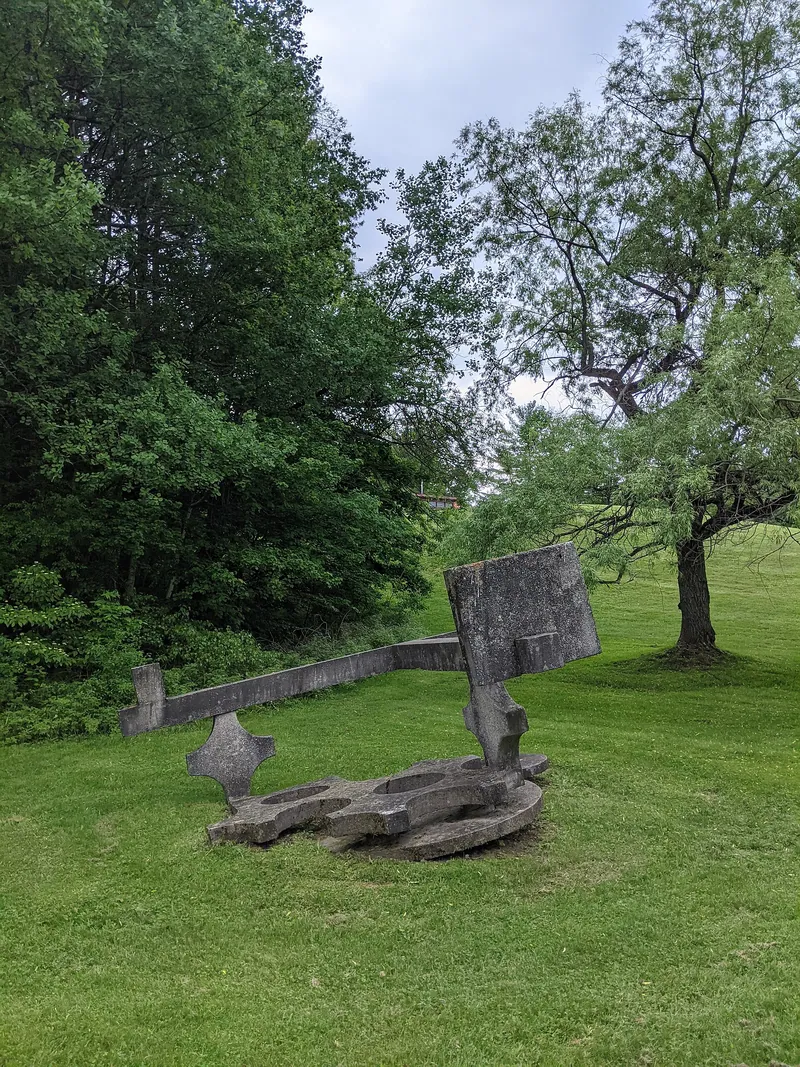
The sculptor Paul Aschenbach had already held a symposium in marble at Proctor. His second, in the summer of 1971, was all concrete, with the Williston concrete firm S.T. Griswold as host. Most of the works went to rest areas on the interstates as Sculpture on the Highway.

Many now stand at rest areas that have closed. A conservation project led by the state curator cleaned the concrete pieces in 2024 and was on hold in 2025 over its federal grant.

Weathered grey concrete slabs and uprights on a lawn among trees
Isaac Witkin's untitled concrete sculpture of 1971 at the Interstate 89 rest area in Randolph, Vermont. Photographed in 2021. Photo: Artaxerxes, CC BY-SA 4.0 (opens in a new tab), via Wikimedia Commons (opens in a new tab)

People Paul Aschenbach, Bradford Graves, Eduardo Ramírez, Clement Meadmore, Isaac Witkin

Sources Seven Days on the restoration (opens in a new tab) · Burlington City Arts (opens in a new tab) · Vermont Historical Society (opens in a new tab) · Sculpture on the Highway, the conservator's page (opens in a new tab)

A white conical concrete tower beside a road
Gonzalo Fonseca's Torre de los Vientos on the Ruta de la Amistad, Mexico City. Photographed in 2019. Photo: Milton Martínez /Secretaría de Cultura Ciudad de México, CC BY 2.0 (opens in a new tab), via Wikimedia Commons (opens in a new tab)

1992–2026

A prize, a museum and a riverbank

A company prize in South Africa, one sculptor's museum in Spain, and a biennial on a riverbank in Puerto Rico.

1992–2019

Pretoria and other cities · South Africa · recurring series

PPC Young Concrete Sculptor Awards

An annual competition for emerging artists working in concrete, started in 1992 by the cement producer PPC (opens in a new tab) as one of its centenary projects, with the Association of Arts Pretoria (opens in a new tab). In 2014 it was relaunched as the PPC Imaginarium Awards, with sculpture as one of several cement-based categories and a travelling finalists' exhibition. Awards in Zimbabwe followed in 2018.

PPC (opens in a new tab) suspended its sponsorship in May 2019.

2002

Doñinos de Salamanca · Spain · museum

Museo Ángel Mateos

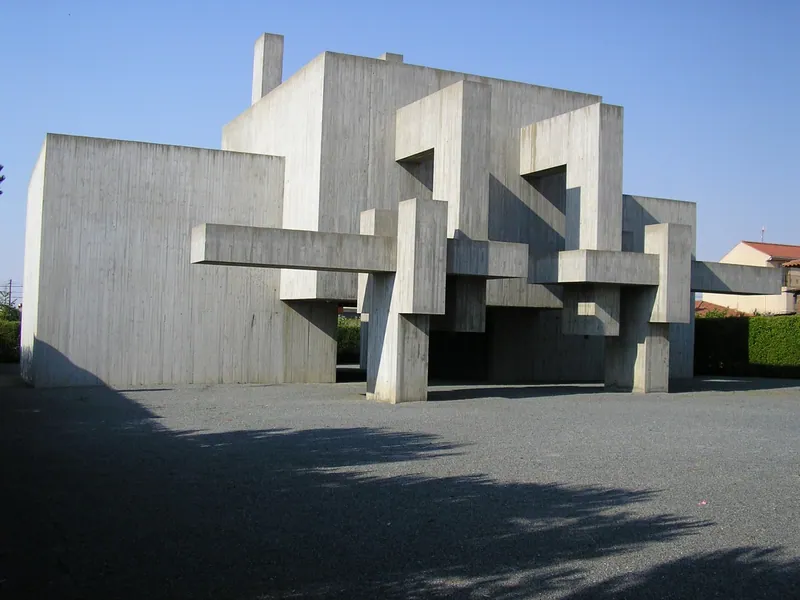
A concrete building that the sculptor Ángel Mateos (1931–2022) designed as a sculpture to hold his sculptures. It opened in May 2002 as the Museo del Hormigón with more than 170 of his concrete works, closed to the public after about two years, and reopened in April 2019 under a family foundation.

The museum calls itself the only one in the world devoted to sculpture in concrete.

A low building of interlocking raw concrete blocks and beams
The Museo Ángel Mateos at Doñinos de Salamanca, the building as sculpture. Photo: Ángel Manuel Mateos, CC BY-SA 4.0 (opens in a new tab), via Wikimedia Commons (opens in a new tab)
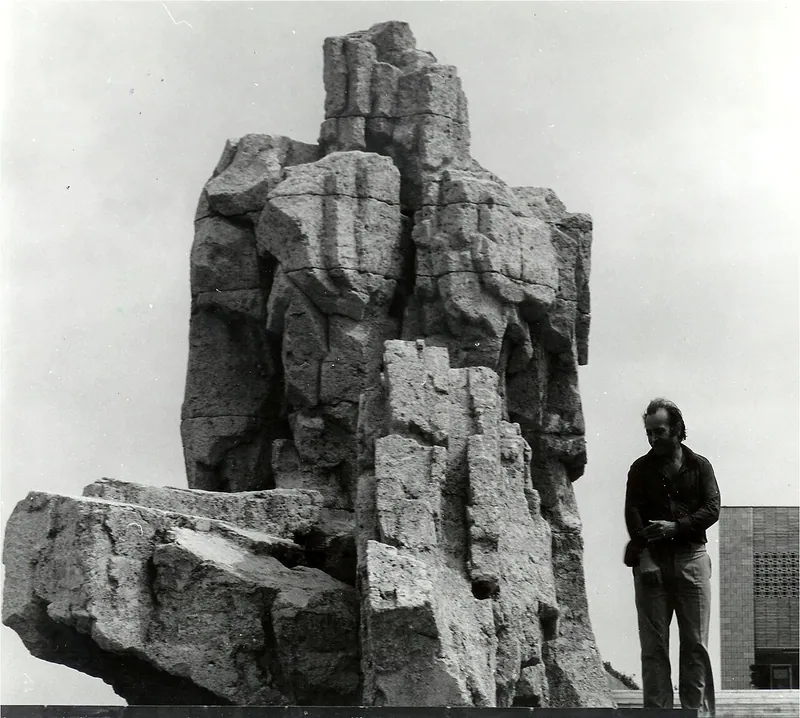
Black-and-white photograph of a tall, rough concrete sculpture with a man standing beside it
Ángel Mateos, Cíclope, 1976. Photo: Ángel Manuel Mateos, CC BY-SA 4.0 (opens in a new tab), via Wikimedia Commons (opens in a new tab)
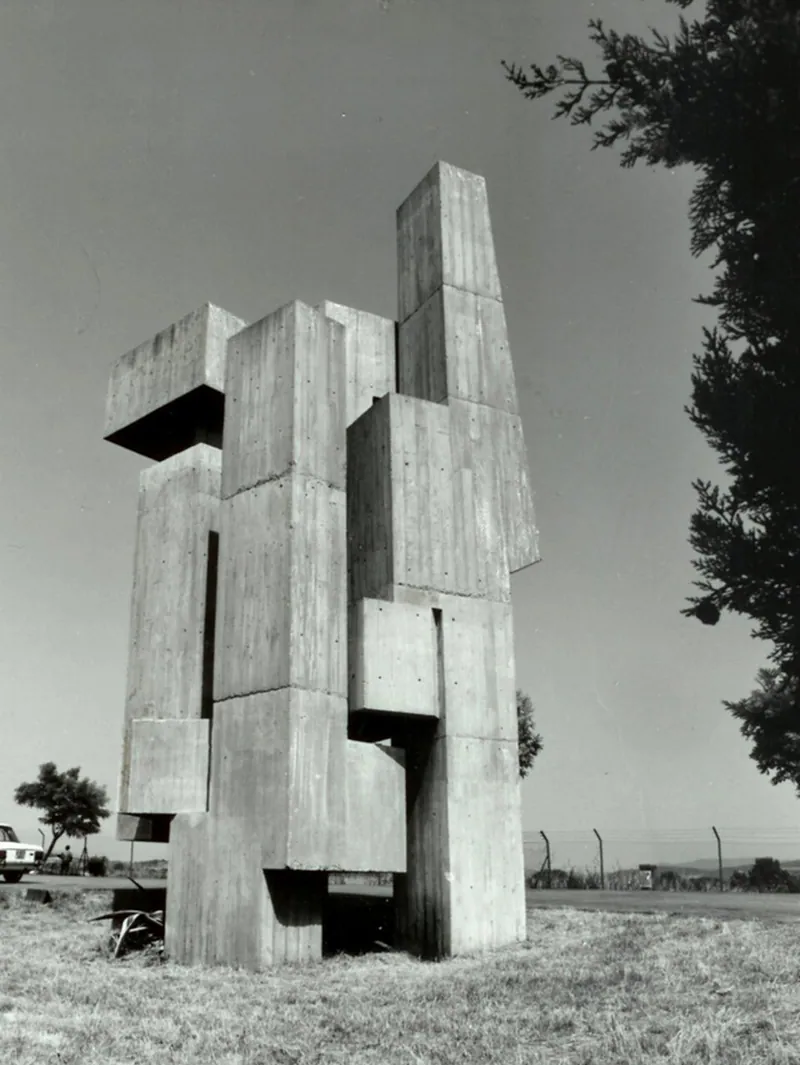
Black-and-white photograph of a tall sculpture of stacked rectangular concrete blocks
Ángel Mateos, La edad del hormigón, 1975. Photo: Ángel Manuel Mateos, CC BY-SA 4.0 (opens in a new tab), via Wikimedia Commons (opens in a new tab)

People Ángel Mateos

Sources La escultura habitable, Museo Ángel Mateos (Spanish) (opens in a new tab) · Castilla y León tourism (Spanish) (opens in a new tab) · Atlas Obscura (opens in a new tab) · Death notice, 13 May 2022 (Spanish) (opens in a new tab)

2003–2026

Caguas · Puerto Rico · recurring series

Bienal de Escultura en Concreto de Caguas

Invited sculptors build monumental concrete works in public on the bank of the Río Cagüitas, where the works stay. The sculptor María Elena Perales conceived it and coordinates it with the Museo de Arte de Caguas and the municipality.

Four editions between 2003 and 2010 lined the riverbank with sculptures. After a gap of sixteen years a fifth, dedicated to Zilia Sánchez, added four more and was inaugurated on 6 November 2026.

People María Elena Perales, Zilia Sánchez, Melquiades Rosario, Dhara Rivera, Annex Burgos, Néstor Otero, Humberto Cazorla Reyes, Yamileth Flores-Reyes, Omar Ortiz Ramos, Linda Sánchez Pintor

Sources Fifth edition, Municipality of Caguas (Spanish) (opens in a new tab) · Background on the project and its founder (Spanish) (opens in a new tab) · Fourth edition, 2010 (Spanish) (opens in a new tab) · After the inauguration, Otilca Radio (Spanish) (opens in a new tab)

2005–2014

Central Europe tries it

Around 2005 the idea returns in Germany and Czechia, again with cement makers and concrete plants as partners.

2005

Nuremberg and Fürth · Germany · one-off

BetonKunst

A city-wide project on concrete as an art material, from 2 to 26 June 2005: a central exhibition on the former Camera-Werke Braun site, concrete objects in the Stadtpark, gallery shows and a catalogue, with seventeen artists. A working symposium ran from 11 to 18 June at the concrete firm TBG Franken in Fürth, led by the artists Franz U. Janetzko and Thomas Grögler.

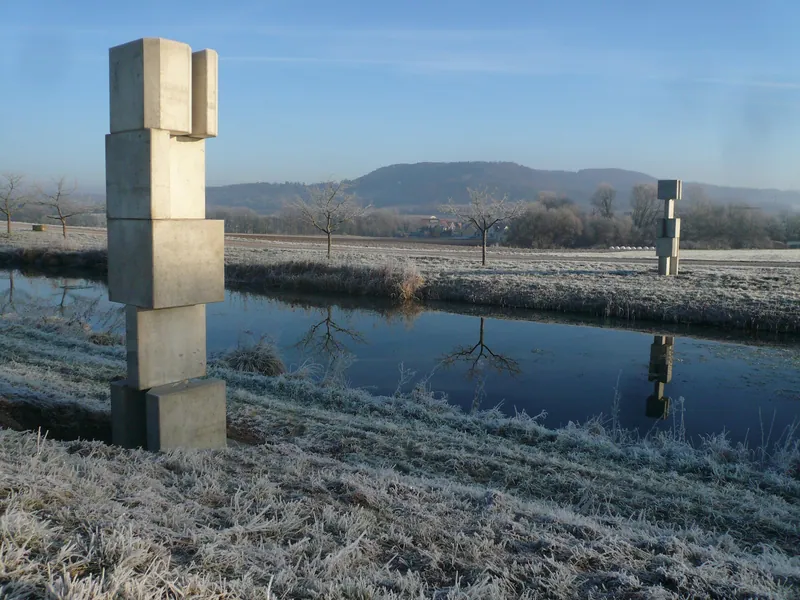
Timm Ulrichs's two-part Einst – Stein was made for it and stood on Klarissenplatz. It was re-erected in 2011 on the Ludwig canal near Berg.

Two stacked concrete block figures on either side of a canal on a frosty morning
Timm Ulrichs, Einst – Stein, made for BetonKunst in 2005 and since 2011 on the Ludwig canal near Berg. Photographed in 2011. Photo: Dli25, CC BY-SA 3.0 (opens in a new tab), via Wikimedia Commons (opens in a new tab)

People Timm Ulrichs, Franz U. Janetzko, Thomas Grögler, Petra Siering, Cony Theis, Christian Rösner, Meide Büdel, Susanne Windelen

Sources Project site (German) (opens in a new tab) · Programme (opens in a new tab) · Symposium (opens in a new tab) · Einst – Stein, Kunst am Kanal (opens in a new tab)

2005

Nový Dvůr near Česká Lípa · Czechia · one-off

Sympozium Betonové sochy

An open call that required work made only in concrete. Six sculptors were chosen from 28 applicants by a jury chaired by Jiří Šetlík. Work began on 11 July 2005 and closed with a show in August. The organisers were the Czech cement makers' association (opens in a new tab), the binders research institute VUMO (opens in a new tab) and the artists' association at Nový Dvůr.

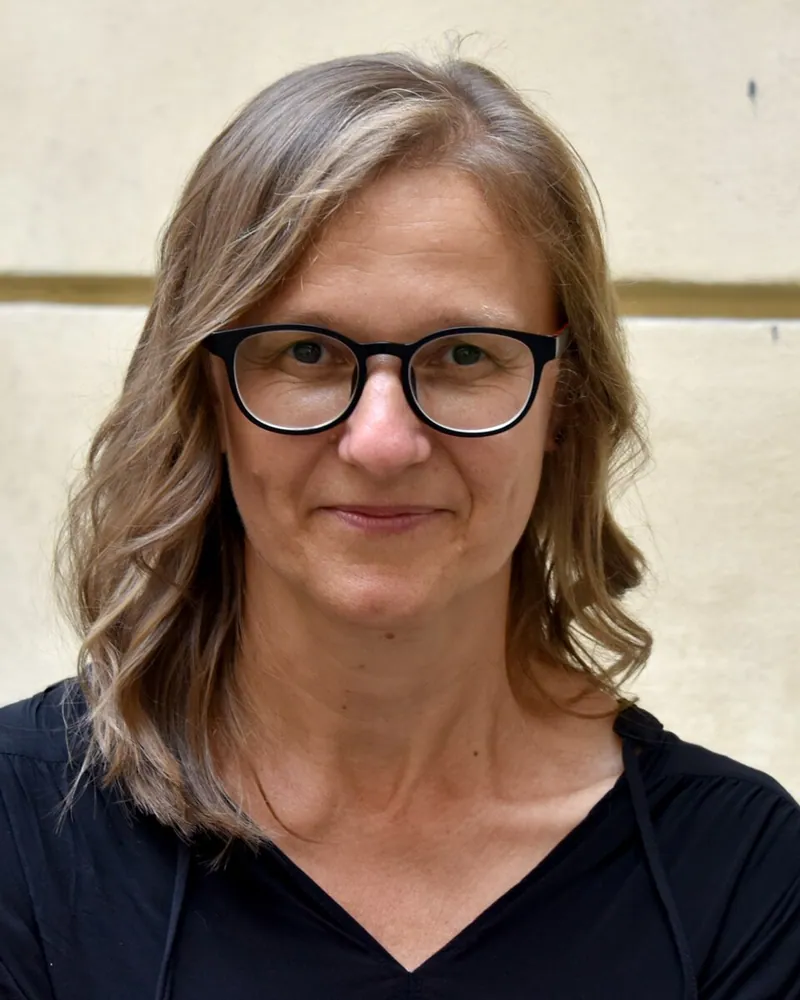
A woman with shoulder-length hair and glasses
Monika Immrová, one of the six sculptors at Nový Dvůr, in 2021. Photo: Jindřich Nosek (NoJin), CC BY-SA 4.0 (opens in a new tab), via Wikimedia Commons (opens in a new tab)

People Adéla Bébarová, Denisa Hřičiščová, Monika Immrová, Rustam Ismagilov, Petr Valer, Miroslav Žáčok

Sources Report, earch.cz (Czech) (opens in a new tab) · Monika Immrová, artlist.cz (opens in a new tab)

2013–2014

Ulm and Elisaari, Inkoo · Germany and Finland · mixed materials

Schale und Kern, and the German–Finnish concrete symposium

Two one-week workshops, closer to craft and design than to sculpture. Ulm, 4 to 10 August 2013: twelve participants, seven German and five Finnish, at the craft chamber's design academy. Elisaari, August 2014: ten art, design and architecture professionals from both countries, hosted by the Finnish designers' association Ornamo (opens in a new tab) with the concrete industry, on products and art for outdoor spaces.

2002–2026

Hungary: four towns, a handful of people

Since 2014 Hungary has had a run of exhibitions and symposia devoted to concrete. They are separate ventures in separate towns, but the same people run through them: a teacher, his student, a ceramicist, two curators.

2014 to 2026
14151617181920212223242526
A Beton ArcaiPécs1.02.03.04.05.06.0solo7.08
Monostori MűvésztelepSzigetmonostor123456
Kísérleti Beton SzimpóziumHódmezővásárhelyIIIIIIIVVVIVIIVIIIIXXXI
BudapestBudapestFUGAMKEBeton²
Vaszary KéptárKaposvárshowI

Pécs: the teaching

Ferenc Csurgai was a course leader at the University of Pécs art faculty from 2002 to 2007. Balázs Veres attended his classes and met concrete as a material for sculpture there. Since 2012 the ceramicist Miklós Zoltán Budán has led the faculty's concrete course, and several of his former students showed at the 2026 triennial.

A review of that triennial speaks of a so-called Pécs concrete school, which it traces to Csurgai's teaching and his pupils.

Sources Veres interview, Papageno, 2020 (Hungarian) (opens in a new tab) · Renewing concrete, Országút, 2026 (Hungarian) (opens in a new tab) · First triennial, University of Pécs (Hungarian) (opens in a new tab)

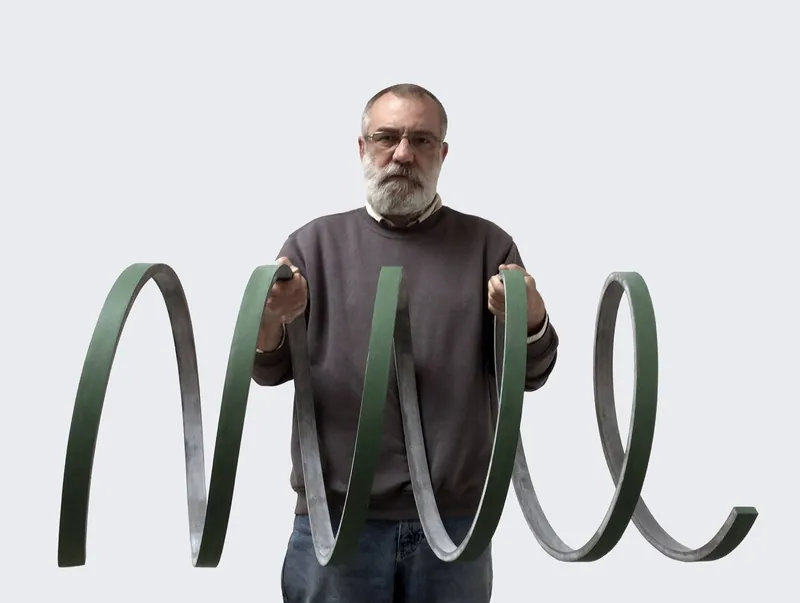
A bearded man in glasses holding a looping green steel band
Ferenc Csurgai in 2018. Photo: Tjp1982, CC BY-SA 4.0 (opens in a new tab), via Wikimedia Commons (opens in a new tab)

Pécs, Nick-udvar · The Faces of Concrete

A Beton Arcai

An annual September exhibition in the Nick courtyard in Pécs, sponsored by LAFARGE Cement Magyarország (opens in a new tab) and later by Holcim. From 2016 it was where each summer's work from the Szigetmonostor colony was first shown.

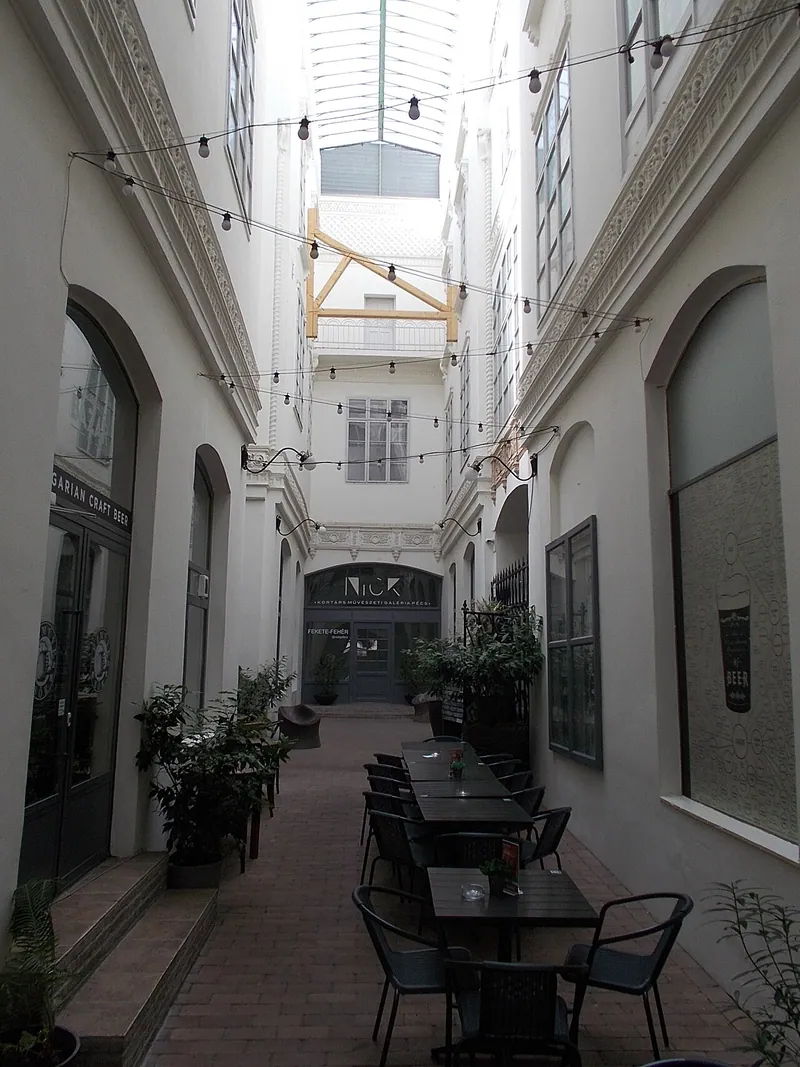
A narrow courtyard passage with café tables between two old buildings
The courtyard of Király utca 1 in Pécs, the address of Nick Galéria. Photographed in 2022. Photo: Globetrotter19, CC BY-SA 3.0 (opens in a new tab), via Wikimedia Commons (opens in a new tab)
  1. 20141.05 Sep – 12 OctArt and design objects in concrete by about thirty makers. source (opens in a new tab)
  2. 20152.0from 11 SepMostly students of the art faculty; close to 2,500 visitors. source (opens in a new tab)
  3. 20163.09 Sep – 9 OctThe first colony's work: ten artists, among them Csurgai, Veres and Péter Szalay. source (opens in a new tab)
  4. 20174.0from 8 SepThe colony's second summer. source (opens in a new tab)
  5. 20185.014 Sep – 14 OctEleven artists, among them Csurgai, Veres and Csilla Szilágyi. source (opens in a new tab)
  6. 20196.011 Sep – 13 Oct source (opens in a new tab)
  7. 2020solofrom 11 SepNo colony, so no group show: Veres fills the slot with a solo exhibition, Full Concrete. source (opens in a new tab)
  8. 20227.09 Sep – 8 OctTwo summers of colony work in one show: fourteen artists, including Mattia Listowski and Natalia Drachinskaya from abroad. source (opens in a new tab)
  9. 202388 Sep – 8 OctIndustrial Silence: five artists, curated by Veres, with Holcim (opens in a new tab) as main sponsor. source (opens in a new tab)

Szigetmonostor · Monostor artists' colony

Monostori Művésztelep

A summer colony devoted to concrete as a material for sculpture, started in 2016 by Balázs Veres with Attila Kovács, who then ran the village's community house. The press also called it the Szigetmonostor Concrete Symposium. Each artist left a work for the village. The last was in 2022; since 2023 it has been looking for a new venue.

  1. 2016118 – 28 JulThe first colony. source (opens in a new tab)
  2. 20172summerTwelve artists from around the country. source (opens in a new tab)
  3. 2018316 – 30 JulMotto: Build a bridge. source (opens in a new tab)
  4. 2019415 – 29 JulEight artists, theme water. David Umemoto, from Canada, takes part. source (opens in a new tab)
  5. 2021512 – 26 JulEight artists, motto: The space is ours. source (opens in a new tab)
  6. 2022618 Jul – 1 AugNine artists. The Concretely's newsletter of 23 May 2022 carried the call for artists. source (opens in a new tab)

Hódmezővásárhely · Experimental Concrete Symposium

Kísérleti Beton Szimpózium

Held at the International Ceramics Centre and the Csomiép (opens in a new tab) concrete plant, where the casting is done. The ceramicist Zsuzsa Pannonhalmi started it in August 2016 with Csomiép's director, Antal Mészáros. Its participants come mostly from ceramics, glass and design.

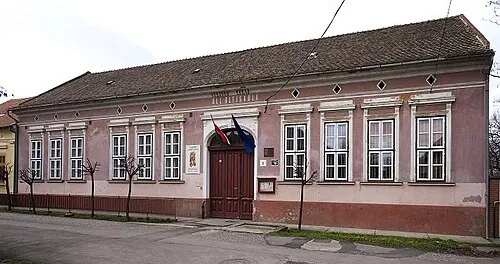
A long single-storey pink building on a street corner
The International Ceramics Centre in Hódmezővásárhely. Photographed in 2015. Photo: Dudás Róbert Gyula, CC BY-SA 3.0 (opens in a new tab), via Wikimedia Commons (opens in a new tab)
  1. 2016IAugustEight days, five artists. source (opens in a new tab)
  2. 2017IIsummer source (opens in a new tab)
  3. 2018III30 Jul – 10 AugSeven participants: three ceramicists, an interior designer, a glass designer, a sculptor and a student. source (opens in a new tab)
  4. 2019IV5 – 16 AugSeven participants. source (opens in a new tab)
  5. 2020VAugust source (opens in a new tab)
  6. 2021VI12 – 23 JulEight participants. The first edition after Antal Mészáros's death. source (opens in a new tab)
  7. 2022VIIMayHeld in spring. Theme: the grove, outdoor pieces for the centre's garden. source (opens in a new tab)
  8. 2023VIII17 – 28 JulTen artists, no set theme. source (opens in a new tab)
  9. 2024IX26 Aug – 6 SepAbout a dozen artists. source (opens in a new tab)
  10. 2025Xto 25 JulThe jubilee, theme: Retuning. Csilla Szilágyi of the Kaposvár team takes part. source (opens in a new tab)
  11. 2026XI20 – 31 JulTheme: Connections. Seven participants. source (opens in a new tab)

Budapest · the colony and its founders on show

Budapest

Three exhibitions took the work to the capital.

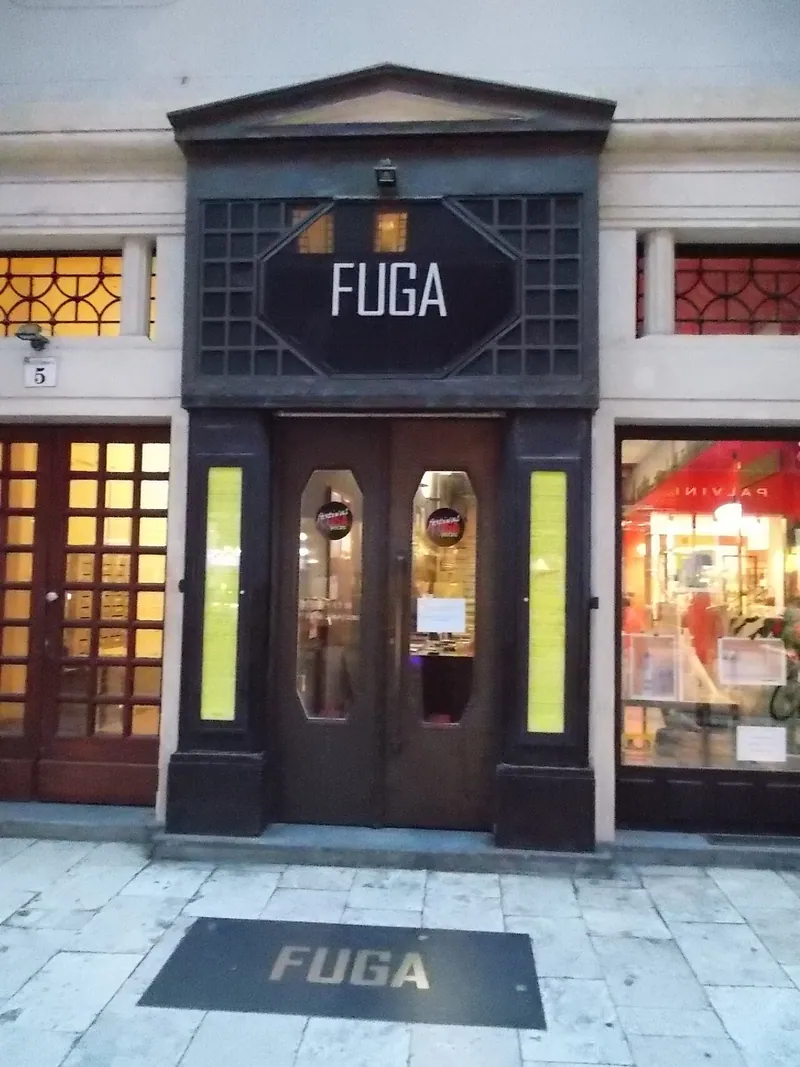
A dark wooden shopfront with the word FUGA above the door
The entrance of FUGA, the Budapest architecture centre. Photographed in 2021. Photo: Globetrotter19, CC BY-SA 3.0 (opens in a new tab), via Wikimedia Commons (opens in a new tab)
  1. 2018FUGA18 Oct – 5 NovB3TON: a selection from the third colony at the FUGA (opens in a new tab) architecture centre, eleven exhibitors. source (opens in a new tab)
  2. 2019MKE15 – 26 OctFour years of the colony at the University of Fine Arts, sixteen exhibitors. source (opens in a new tab)
  3. 2023Beton²9 – 25 MayCsurgai and Veres together at Hybridart Space (opens in a new tab), twenty years after teacher and student met. source (opens in a new tab)

Kaposvár · Kaposvár

Vaszary Képtár

In 2024 the Vaszary Képtár (opens in a new tab) in Kaposvár showed ten artists in Újraalkotott kő (Remade Stone), curated by Lilla Pajger-Kovács and Csilla Szilágyi. Its success led to the first Betonszobrászati Triennálé in 2026, Pajger-Kovács's idea, founded with Veres, Csurgai and Szilágyi.

Sources Exhibitors of the triennial, Kaposvár Most (Hungarian) (opens in a new tab)

  1. 2024showfrom 7 SepÚjraalkotott kő: ten artists. source (opens in a new tab)
  2. 2026I9 Jul – 19 AugFirst Concrete Sculpture Triennial. 73 artists applied with about 160 works; 43 artists and 73 works were shown, among them Ferenc Csurgai, Balázs Veres, Roland Lieb, Miklós Zoltán Budán, Péter Szalay and Csilla Szilágyi. Veres gave the opening speech. source (opens in a new tab)

2026

Zakopane and Ube

Two more from 2026.

2026

Białka Tatrzańska and Zakopane · Poland · one-off

Stacja Rzeźba 2026

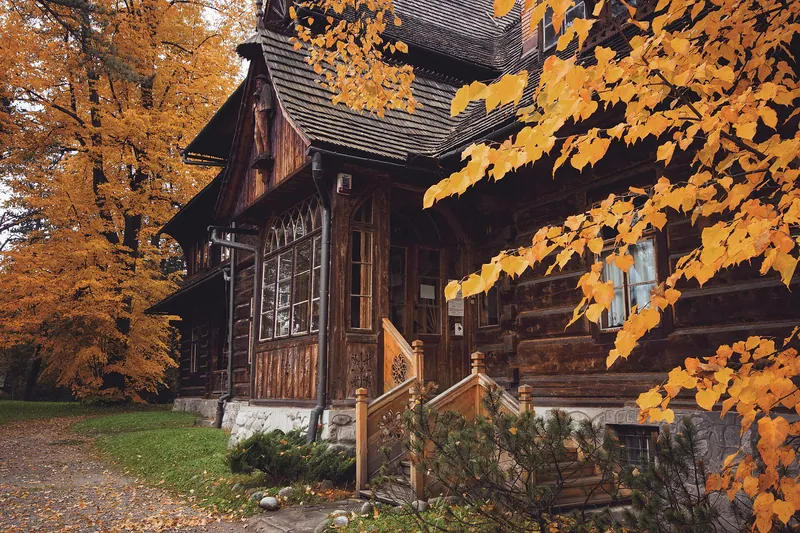
A symposium for young artists in the Podhale region, 14 to 28 August 2026, with concrete as its lead material, after the local sculptors Henryk Burzec and Barbara Grocholska-Kurkowiak. The participants worked in applied concrete. It was started by Danuta Kolasa with Natalia Klara Marczewska and Kinga Smaczna-Łagowska, graduates of the sculpture faculty in Warsaw, and closed with an exhibition in the garden of Willa Koliba in Zakopane. The first edition, a year earlier, was in wood.

2026

Ube · Japan · one-off

Cement Sculpture / After Permanence

野外彫刻リサーチVol.2 セメント彫刻/After Permanence

Volume 2 of Ube's Outdoor Sculpture Research series, 10 April to 28 June 2026 at the Tokiwa Kosui Hall art gallery. It was built around Yamauchi Takeo's cement sculpture of 1960, made for the fountain in front of Ube-Shinkawa station and moved in 1983 to a small park, where it still stands, weathered. The exhibition traced the line of cement sculpture and its tie to coal and cement, with a new installation by Tomosada Mutsumi.

A grassy hill with large outdoor sculptures under a clear sky
The sculpture hill in Tokiwa Park, Ube, home of the city's outdoor sculpture. Photographed in 2017. Photo: そらみみ, CC BY-SA 4.0 (opens in a new tab), via Wikimedia Commons (opens in a new tab)

People Yamauchi Takeo, Tomosada Mutsumi

Sources Event page, Ube sculpture site (Japanese) (opens in a new tab) · Artscape listing (Japanese) (opens in a new tab)

Map

Places and people

Who paid

People who link places

  • Bradford GravesMaribor 1970, Vermont 1971
  • Pierre SzékelyGrenoble 1967, Mexico City 1968
  • Miloslav ChlupáčGrenoble 1967, Mexico City 1968
  • Balázs Veresstudent in Pécs, founder at Szigetmonostor, co-founder in Kaposvár
  • Csilla Szilágyiexhibitor in Pécs, guest in Hódmezővásárhely, curator in Kaposvár

Notes

Method

Compiled in November 2026 from web sources in eleven languages, then checked claim by claim against those sources and at least one other. Nothing was checked in archives or print catalogues. Nothing dedicated turned up for Italy, Scandinavia, the Netherlands, the Soviet Union or China. Corrections are welcome. Write to info@theconcretely.com.

Photographs are used under the free licences named beside them. The land outline on the maps is from Natural Earth, public domain.